At Kraft Bazaar, we are committed to the highest levels of customer experience. You can get answers to most of your queries related to your purchase from our support team. In case you still have an unanswered query, feel free to reach out to us at the below coordinates:
Company Name – Kraft Bazaar
company Address – F- 301, MIA 2nd Phase, Basni, Jodhpur, Rajasthan 342005
To raise a query, write to us at – care@kraftbazaar.com
Grievance Officer
In accordance with Consumer Protection (E-Commerce) Rules, 2020 made there under, the name and contact details of the Grievance Officer are provided:
Officer Name – Keshav Kabra
Company Name – Kraft Bazaar
Company Address – F- 301, MIA 2nd Phase, Basni, Jodhpur, Rajasthan 342005
Mobile No: – +91-99500 66668
Email id – care@kraftbazaar.com
Delivery:
- Our support and delivery teams will be in touch with you for a hassle-free delivery.
- Free delivery is only applicable for the first attempt to deliver at your shipping address. If a customer misses this delivery, an extra visiting charge will be applicable for the second attempt.
- In the absence of a service lift, our delivery partner shall only make a delivery to the ground floor of your apartment.
- Extra charges are applicable per floor on delivery to the customer’s floor (on request) in such cases.
- Extra charges were applicable for a weekend or time-specific delivery.
- Your product(s) will be held for 10 days at the nearest delivery hub if you’ve failed to receive the delivery. After this, Kraft Bazaar reserves the right to either change or cancel the order.
Installation:
- Depending on the delivery condition, your product may or may not require installation assistance upon delivery.
- If The Delivery Condition Is:
- Pre-assembled – no installation is required. The product comes fully assembled and ready to use.
- Expert Assembly – expert assistance is required, for which WoodenStreet will provide carpenters to carry out proper installation and assembly.
- Basic assembly/DIY – the product requires minimal installation/assembly, which can be carried out by the customer using simple tools and assembly instructions provided. No expert assistance is required.
Customers can Contact Company Name For further Assistance at the below contacts: –
E-mail: – care@kraftbazaar.com
Mobile No.: – +91-99500 66668
For any questions or clarifications relating to the product, feel free to contact our Customer Support at +91-99500 66668
Understanding Your Product:
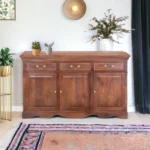
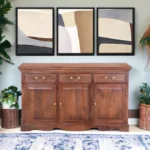
- Accessories shown in the photograph are meant for representation purposes only and are not part of the actual product.
- Furniture products having intricate and hand-painted details have been meticulously created by skilled craftsmen, following in the footsteps of several generations of accomplished artisans. Each piece of such Furniture is, thus, unique, and there is a possibility of slight differences between the picture and the actual product.
Placing An Order:
- Please check the dimensions of your entrance/door to your premise before buying, so that there is no problem in getting the product inside at the time of delivery. In such a situation, we will not be able to accept return or cancellation requests. Certain items require no assembly and can be used as-is. For this, please check the item details. Wherever we assist with assembly, the Customer can contact support assistance with Kraft bazaar.
On Returns:
- If you select to return the item, kindly make sure that the product is ready and packed in its original condition. Know More
- Please note that customised orders are final and non-returnable. We do not accept returns or exchanges for any personalised or made-to-order items.
Damages:
- Kraft Bazaar’s delivery arrangements to your home have been designed to ensure a zero-damage and hassle-free experience.
Please contact us immediately if: You received a damaged or defective product, bring it to the notice of delivery personnel immediately at the time of delivery and report a complaint to customer care at care@kraftbazaar.com. damage & defect will be assessed in 72 hours, and a solution will be provided. If in the opinion of Kraft Bazaar, the product is broken, it may be returned/replaced, or any other corrective measure may be taken, as deemed appropriate by Kraft Bazaar, to address the issue.
Any missing parts required in the assembly of the product should be immediately notified to the Customer Support team so that they can be arranged to be delivered to you as soon as possible.
This product comes with a 3-year warranty which covers manufacturing defects, inherent termites, and borer issues. For upholstered products, the warranty applies to the frame, and mechanisms, if any.
- This limited warranty does not apply to the following:
- Normal wear and tear of the product over prolonged use
- Small cuts, scratches, or damages due to wrong cleaning methods or impacts/accidents
- Damage caused due to incorrect installation/assembly by the customer
- Cracks developed due to the displacement of the product
- Fading due to direct exposure to sunlight
- Decaying of wood due to consistent exposure to water
- Upholstery fabrics such as seat covers have no warranty
- Non-standard dry-cleaning procedures or the use of harsh chemicals.
As per industry standards, unevenness of up to 10 mm is accepted widely due to differences in floor and surface levels. This is not covered by a warranty.


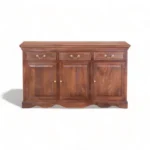
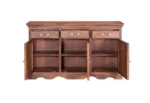

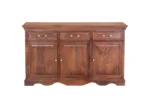
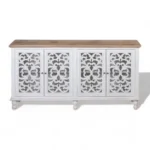
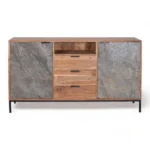
 Width: 150cm
 Depth: 40cm
 Height: 90cm




HarryRom –
We are sorting a box of family jewelry, and the color question has become more interesting than expected. Some pieces are silver toned, others are gold toned, and several combine both metals in the same design. We want to decide what each person might enjoy wearing, while keeping the family stories attached to every piece. The shape usually catches my attention first, while the color of the metal is much harder to assess. Comparing a broad pendant with a fine chain seems unfair because their size changes how much light they reflect. Should we compare simple samples with matching dimensions first, then see whether the observation carries over to each piece? The subject I am trying to understand is [url=https://bodytypes.top]color analysis[/url] but I would rather treat any result as an observation than let it overrule a sentimental attachment. Which comparisons would you make first, and how much weight would you give them when choosing an everyday piece?
NoahRom –
I am planning a short listening exercise for an audio workshop. The aim is to help participants describe what they hear before they decide which version they prefer, rather than treating every change as an improvement. A brief generated recording would provide the starting example. Every version would contain an identical stretch of the performance. A page discussing [url=https://musicartifactfix.top]ai music artifact removal[/url] gave me a starting point for the topic, but it does not settle how to structure the exercise. I would match playback levels before presenting the versions. A first round without labels might encourage independent observations. The original excerpt needs to remain available throughout. I would ask about texture, transients and vocal clarity separately. We could repeat the excerpts in a different order and discuss disagreements, since a single preference vote would reveal little about the reasons behind it. How would you make this demonstration useful and fair?
Emilydora –
I am helping organize a neighborhood clothing exchange. We have enough donations to arrange several rails by color. The organizers suggested seasonal labels, but I worry that a sign could sound like a rule about who should wear each item. I want the signs to help people browse comfortably. For example, muted blue and bright blue seem useful distinctions. We will have only one afternoon to sort everything, so the method needs to be understandable without a consultation. There will also be a mirror available for visitors who want to try their own comparisons. I have been reading about [url=https://colorpaletteanalysis.top]color analysis[/url] to understand the vocabulary before printing anything. The difficult part is avoiding an implied diagnosis. Someone might want a shade that deliberately contrasts with their usual choices. Would plain descriptions be more useful than season names? I would welcome a short labeling rule that volunteers can apply consistently.
Ellakn –
I am cataloguing two old family photographs whose subjects have not yet been identified. A small change in head position makes the jaw look noticeably different between the pictures. My aim is to record the outline carefully without using it to establish who someone is. Separate notes about the forehead, cheekbones and chin would probably be more useful than one label. I have bookmarked [url=https://faceshapecalculator.top]face shape calculator[/url] as a possible comparison reference. Before using it, I would like a sensible way to mark uncertainty caused by pose. I can prepare comparison copies while keeping the original framing visible for anyone reviewing the notes. What would you include in a brief record of these visible outline differences? I would rather leave a category unresolved than make the catalogue sound more certain than it is. The notes should remain understandable without access to our earlier conversation.
Dragon_inEn –
Загляните в [url=https://telegram.me/s/andrii_nebytov]DragonMoney актуальная ссылка[/url], чтобы испытать удачу и насладиться захватывающей игрой в Telegram!
Пользователям достаточно нажать на кнопку и следовать инструкциям, чтобы начать играть.
Norapl –
We are preparing for my teenager’s first consultation about layers. The reference pictures all show a bouncy finish, but the everyday routine is usually a quick wash followed by letting the hair dry on its own. I want the consultation to leave room for honest questions. The decision should still belong to the person wearing the haircut. One useful question came from looking up [url=https://virtualhairstyles.top]butterfly haircut maintenance[/url] since the styling steps matter as much as the picture. An example of air dried layers would help the discussion. We also need to ask about tying the hair back for school. A realistic demonstration would be welcome. The photo is a conversation starter rather than a fixed specification. We can take notes during the appointment and ask which steps are optional. That would make it easier to distinguish ordinary care from styling for a special occasion. How would you make that consultation useful for someone new to layers?
ChloeSr –
My blunt fringe is growing out, and the current length is difficult to arrange. The centre pieces reach my cheekbones, while the sides are still uneven. I have been looking at [url=https://haircutideas.top]blonde hair with curtain bangs[/url] for ideas about the outline, although the photographs rarely explain the transition between cuts. I would like the front to blend into the rest without losing much length. A slightly uneven centre part seems to be where my hair naturally falls. I can shape it with a brush, though I would rather avoid heat every morning. Would you tidy the side sections at this stage or let everything catch up first? I will show the hairdresser how the front sits without a styled finish. I usually wear the rest of my hair loose, which makes the difference between the short front pieces and the longer sides quite noticeable. I would appreciate practical advice from anyone who has managed this transition.
Kevingrots –
Инфузионная терапия может включать растворы для восполнения жидкости, электролитов и поддержки обмена веществ. В отдельных случаях врач использует витаминные препараты, средства для нормализации сна и другие лекарственные группы. Седативные, снотворные, ноотропы и кардиопротекторы назначаются только по медицинским показаниям. Любая инъекция или внутривенное введение осуществляется специалистом.
Изучить вопрос подробнее – [url=https://vyvod-iz-zapoya-v-krasnodare23.ru/]помощь вывод из запоя[/url]
Jackfah –
While clearing out my wardrobe for a move, I keep finding tops that serve almost the same purpose. The difficulty is that each piece looks reasonable alone, yet several colors seem awkward beside my usual trousers. My aim is to keep fewer clothes while preserving some variety, because wearing the same combination daily would bore me. For now, I place existing pieces beside one another and note which combinations require buying something else to work. I found a page about [url=https://outfit-style.top]color analysis[/url] and would like to use the idea as a starting point for these comparisons. Blue pieces get regular use, while the cream, rusty orange, and muted pink items often stay in the drawer. Would you begin with two reliable neutral colors, or first identify an accent that works with several existing pieces? I sometimes blame the shade when the real problem might be the fit, and would like to distinguish those issues. For anyone who has made a smaller wardrobe work, what test helped you choose the pieces worth keeping?
NoraSaw –
I am comparing an untimed practice session with a timed one and trying to understand what the difference actually means. A lower score under time pressure could reflect several problems. I do not want to assume that every wrong answer points to the same gap in knowledge. My notes track the slowest sections. Certain instructions make me read again. I also notice mistakes from rushing. A phrase I used to find background material was [url=https://policeexamquestions.top]ntn police practice test[/url] and I am using it as a starting point for further questions. The answer key cannot explain everything. I need to compare similar tasks. Familiar items can make progress misleading. I will check official assessment guidance. My next step is to note whether each error involved understanding the instructions, choosing between plausible answers or running out of time. I also want to avoid treating a practice score as a prediction of a hiring outcome. The purpose is to decide what to study next. Which observations would make comparison useful?
Treaskbak –
Website: [url=https://sites.google.com/view/spinboss-guia-portugal-97w]spinboss[/url]
NoraSwix –
A friend and I have collected practice questions from several sources, and the collection is becoming difficult to use. Some items discuss broad principles, while others mention a particular state or agency. Before doing another session, we want to sort the material so that the context of each question stays visible. The source should remain attached. Jurisdiction details should be easy to see. Uncertain classifications deserve a separate pile. My background reading began with [url=https://realestatelicensetest.top]national real estate exam[/url] and raised several questions worth checking directly. The original wording needs to remain intact. I would avoid forcing uncertain classifications. Official outlines can guide the sorting. The result should support focused sessions. We are not trying to turn an informal collection into an authoritative syllabus. The aim is to identify what each item is about and where its explanation came from. Any uncertainty about the actual examination scope should be checked against current information from the responsible organisation. What classification method would you use?
Jackguh –
I am considering a real estate course in Georgia and want to understand the sequence before enrolling. Course advertisements explain what they sell, but I still need a clear picture of which steps depend on something else being completed first. I am building a simple diagram rather than choosing a course from its headline alone. The diagram starts with my questions. I want meaningful links between steps. Enrolment is only one decision. My background reading began with [url=https://realestatelicenseguide.top]how to get a real estate license in georgia[/url] and raised several questions worth checking directly. The official requirements need a fresh check. I want sources for provider claims. Uncertainty should remain visible in the diagram. I want focused questions for providers. I would like to compare this diagram with the relevant official guidance and then ask providers about the particular services they offer. That should help me distinguish an explanation of the licensing process from a promise about what purchasing a course will achieve. Which dependencies would you clarify first?
Avakt –
I have reached the fitting stage of a trouser project and need a clearer way to record proportions. Standing looks acceptable, while sitting makes the fabric strain around my hips. Different body shape guides seem to give me different names for the same measurements. I can record waist and hip measurements alongside the pattern size, then note where each adjustment changes the fabric tension. A useful explanation of proportions would help me more than another category to remember. Would a fitting notebook help distinguish my measurements from the extra room allowed by the pattern? For context, this is the terminology reference currently in my notes: [url=https://findyourbodyshape.top]body shape and colour analysis[/url] Colour can wait until the fit is settled; the silhouette is what I need to understand first. I would appreciate a practical sequence for checking proportions before changing the pattern again.
Hannahquic –
Our sewing class is fitting a simple jacket, and the advice about body types has become surprisingly difficult to apply. The cotton sample stands away from my waist, while a softer version of the same pattern hangs much closer. Some classmates describe the result using proportions, while others immediately reach for a named style category. For the next session, I want a short list of visible features rather than an immediate verdict. The reference I am considering covers [url=https://bodytypeguide.top]body shape and colour analysis[/url] and I would use it to organize questions before bringing them back to class. Would you compare shoulder placement, hem length, or fabric weight first when the basic pattern remains the same? My aim is a useful fitting record that explains each alteration instead of merely attaching a type label. Photographs of each sample under the same conditions should make the comparison easier to explain during the next lesson.